

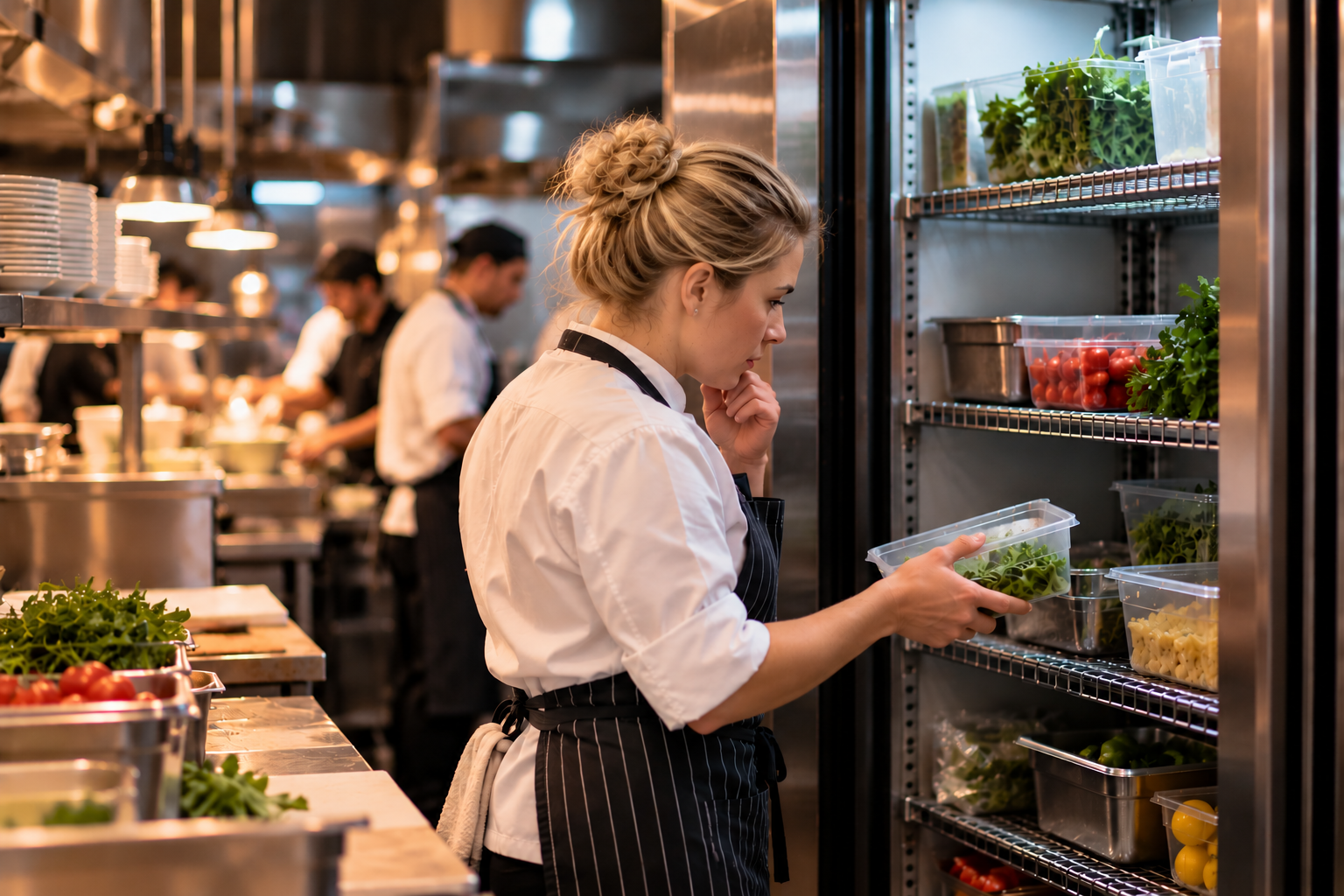
It's Friday evening, the restaurant is filling up, and the kitchen is preparing for one of the busiest nights of the week.
Everything seems to be going according to plan until someone realizes they're running low on a key ingredient.
The chef asks the team to check the walk-in cooler. Someone calls a supplier to see if an emergency delivery is possible. Meanwhile, servers are being told that one of the restaurant's most popular dishes might not be available for the rest of the night.
It's frustrating for everyone, especially when the restaurant has been ordering inventory regularly.
So how does this happen?
The problem isn't always that someone forgot to place an order. Sometimes, it's that purchasing decisions aren't connected to actual inventory usage, sales patterns, or upcoming demand.
And that's where effective restaurant inventory management makes a difference.
Ordering Inventory Shouldn't Be a Guessing Game
Many restaurant operators develop purchasing habits based on experience. They know approximately how much product they use each week, which days are busiest, and when suppliers usually deliver.
That experience is valuable, but restaurants don't operate under the exact same conditions every week.
A local event might bring unexpected traffic. A promotion could increase demand for a particular dish. A holiday weekend might change purchasing patterns entirely.
When inventory orders are based only on what happened last week, restaurants can find themselves with too much of one product and not enough of another.
Accurate restaurant inventory tracking helps operators understand how quickly products are being used, how much inventory is available, and when it's time to reorder.
Instead of reacting when something runs out, the team can plan ahead.
Your Sales History Can Help You Prepare for What's Next
Think about how much information your restaurant already collects.
Your point-of-sale system tracks what customers order, when they order it, and which days generate the most activity.
Your purchasing records show how frequently ingredients are ordered and how supplier pricing changes.
Your inventory counts tell you what's actually available.
When this information is connected and reviewed consistently, it becomes a valuable tool for restaurant inventory forecasting.
For example, if your restaurant consistently sells more seafood on weekends, you can use that history to estimate upcoming demand and adjust purchasing accordingly.
Of course, forecasts won't predict every unexpected rush or cancellation. But they provide a much stronger starting point than simply ordering the same quantities every week.
The Importance of Having the Right Inventory at the Right Time
One of the biggest challenges in restaurant purchasing is finding the right balance.
Ordering too little can lead to unavailable menu items, emergency purchases, and disappointed customers.
Ordering too much can tie up cash in products that may sit in storage longer than necessary.
This is why inventory management should be connected to purchasing schedules, supplier lead times, and expected sales.
Establishing appropriate reorder points and reviewing inventory turnover can help restaurants maintain enough stock to support operations without purchasing more than they need.
For multi-location restaurant groups, this becomes even more important.
One location might have excess inventory while another is running short. Without reliable records and consistent inventory procedures, those differences can be difficult to identify.
Inventory Management Is Also About Cash Flow
Every inventory order represents money leaving your restaurant's bank account.
When purchasing isn't carefully planned, restaurants may spend more cash than necessary on products they won't use immediately.
That cash could otherwise be available for payroll, equipment repairs, or other operating expenses.
Good restaurant inventory management helps owners understand not only what they need to purchase, but also when those purchases make financial sense.
It creates a connection between kitchen operations, purchasing decisions, and cash flow planning.
And that connection is especially important in an industry where expenses need to be managed carefully.
Better Planning Starts With Better Numbers
At Cerboni Services, we understand that restaurant owners have enough to manage without constantly worrying about whether their inventory records are accurate.
Our restaurant inventory management and accounting services help operators organize inventory information, monitor purchasing activity, and better understand how inventory decisions affect their financial performance.
Because inventory management isn't simply about keeping shelves stocked. It's about giving your team the information needed to make better purchasing decisions and keep operations running efficiently.
The next time your restaurant prepares for a busy weekend, ask yourself whether your inventory orders are based on reliable information or simply what you think you'll need.
That difference can have a bigger impact on your business than you might expect.