

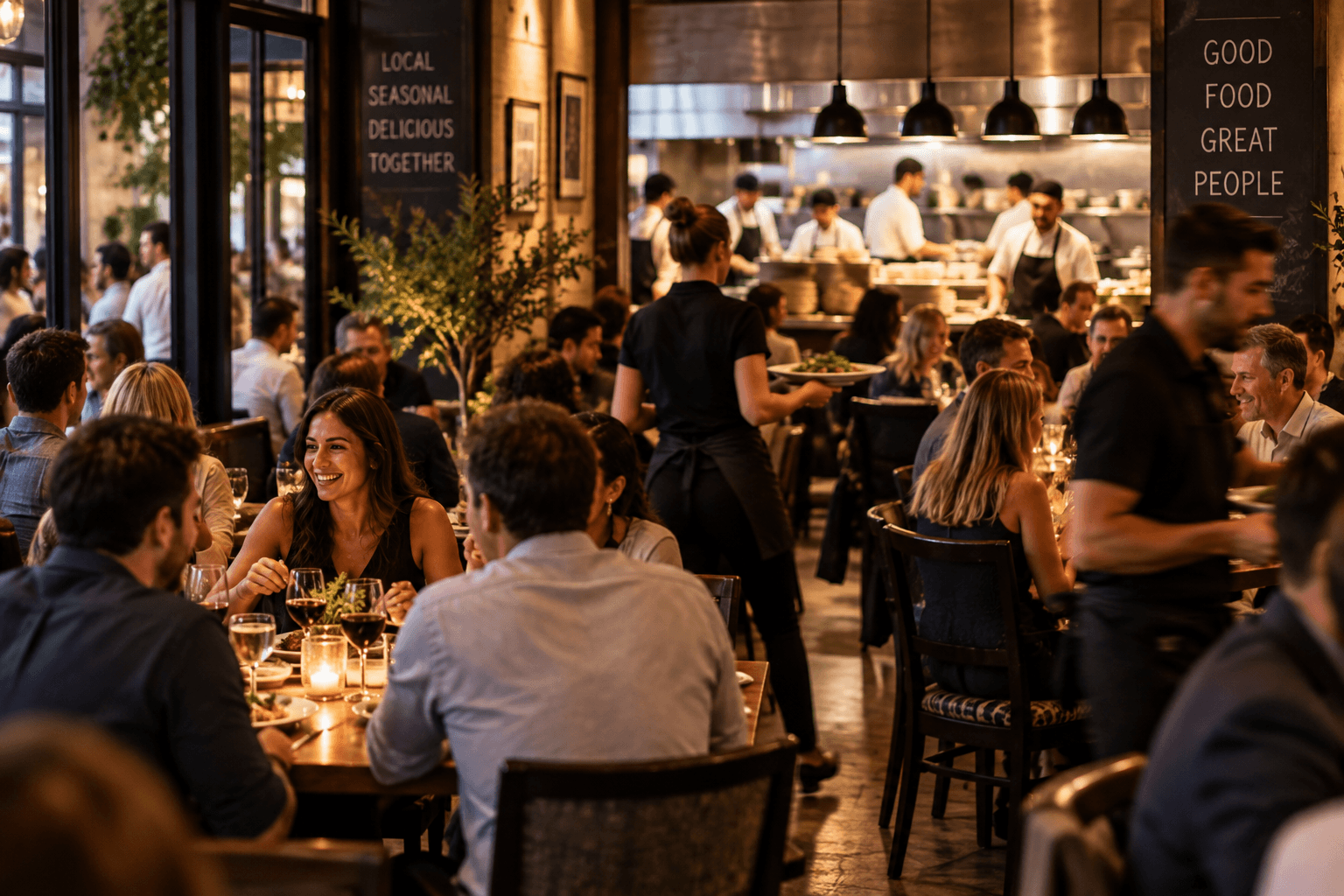
There are few sights more satisfying than a full restaurant.
The kitchen moves with purpose, servers glide between tableswith practiced confidence, and conversations blend into the familiar soundtrackof a busy dining room. It's the kind of evening every restaurant owner imagineslong before the doors ever open. Looking around, it's easy to believeeverything is exactly as it should be.
That's why one of the most surprising conversations we havewith restaurant owners often begins with the same sentence.
"We've never been this busy."
It's usually said with equal parts pride and confusion.
Because the next sentence is often the complete opposite.
"So why does it still feel like we're constantlytrying to catch up?"
At first glance, it doesn't make much sense. The restaurantis full, sales are healthy, guests are happy, and the team is working hard. Byevery visible measure, the business appears to be thriving. Yet behind thescenes, payroll seems to arrive faster every month, vendor invoices continue togrow, food costs creep upward, and there never seems to be quite as much cashavailable as expected.
A Busy Restaurant Isn't Always a Profitable Restaurant
One of the biggest misconceptions in the restaurant industryis believing that a busy restaurant automatically becomes a profitable one. Weunderstand why people think that. More guests should mean more revenue, andmore revenue should mean more profit. But restaurants have a way of remindingus that business is rarely that simple.
Profitability is shaped by dozens of decisions that guestsnever see.
It's influenced by how inventory is managed, how often menuprices are reviewed, how labor is scheduled, how vendor costs change throughoutthe year, and whether financial information is reviewed consistently instead ofonly at tax time. None of those decisions attract much attention during aFriday night dinner rush, but together they determine whether a successfulservice translates into a healthy business.
What Really Drives Restaurant Profitability?
That's one of the reasons restaurant bookkeeping is sodifferent from bookkeeping in many other industries.
A restaurant is constantly moving. Inventory arrives everyday, payroll changes every week, sales come from multiple channels, food costsfluctuate, and operating expenses rarely stay the same for long. Goodrestaurant bookkeeping isn't simply about recording transactions. It createsthe foundation for reliable financial reporting, helping owners understandwhere money is being earned, where it's being spent, and why those numberschange from month to month.
We've found that owners rarely struggle because they don'tcare about the financial side of their business. In fact, most care deeply. Thechallenge is finding time to step back and understand what the numbers aretrying to say while also managing employees, vendors, guests, and everythingelse that comes with running a restaurant.
That's where perspective becomes valuable.
Restaurant Financial Reporting Should Tell a Story
Restaurant financial reporting should do more than summarizethe past. It should help owners make better decisions about the future. Itshould answer questions before they become problems. Why is cash flow tighterthan last quarter? Why are labor costs increasing faster than sales? Is foodcost following seasonal trends, or is something changing inside the operation?Those answers don't come from instinct alone. They come from accurateinformation and the willingness to look beyond revenue.
One of our favorite moments happens during a financialreview when an owner stops looking at the reports as accounting documents andstarts seeing them as a reflection of the restaurant they know so well.Suddenly, the numbers explain why weekends have felt more stressful, whymargins have narrowed despite strong sales, or why one location consistentlyoutperforms another. It's not because the reports have changed. It's becausethe story behind them has finally become clear.
Looking Beyond Restaurant Sales
That's the role we believe restaurant accounting shouldplay.
Not simply organizing financial data or preparing taxreturns, but helping owners understand the business they've worked so hard tobuild. Whether the conversation is about restaurant bookkeeping, payroll,inventory management, financial reporting, cash flow, or long-term planningthrough Fractional CFO services, the objective is always the same. Betterinformation leads to better decisions, and better decisions create strongerrestaurants.
Restaurant Accounting Should Make the Business Clearer
Restaurant owners already understand hospitality better thanalmost anyone. They know their guests, they know their team, and they know whatit takes to create an experience people remember. They shouldn't have to becomeaccountants to understand whether their business is healthy.
They simply deserve financial information that is as clearand dependable as the operation they've spent years building.
Turning a Full Dining Room Into Long-Term Success
Because a full dining room is certainly worth celebrating.
Understanding why that success is or isn't translating intolong-term profitability is what allows the next chapter of the story to be evenbetter than the last.